 SPEAK TO US
 Hire Quote





 My Account




 Hire
Hire Depot
Depot My
My




Working at height is something most people encounter at some point, whether it’s part of your job or you’re just getting some DIY tasks done at home. Ladders are usually the first thing people reach for, and in a lot of cases, they’re exactly what’s needed. At Smiths Hire, we supply a wide range of ladder hire options alongside our wider tool hire services, so getting hold of the right equipment for the job is straightforward from the outset.
That said, not every ladder suits every job. It’s easy to underestimate how much difference the right choice makes until you’re halfway through and things feel awkward or harder than they should be. Taking a bit of time to think it through beforehand keeps the job running smoothly once you’re up there and avoids you having to try and work around the wrong setup.
Access hire options
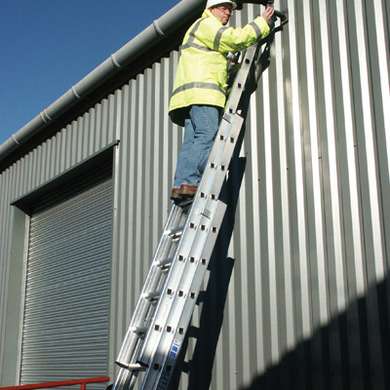
Every job at height comes with its own way of working, and that usually points you towards the right equipment straight away. In plenty of cases, a ladder is the most straightforward option, especially when the job involves quick access or shorter tasks where you’re not in one position for too long.
If you’re going to be up there for a while or moving around a lot, that’s where the setup starts to matter more. Ladders are great for getting in and out and handling shorter jobs, but they’re not always the best fit for anything more involved.
It’s a case of matching the equipment to the job, whether that means sticking with a ladder hire or looking at other access hire options like powered or non-powered access hire, that may better suit the way you’ll be working.
Pick the right type of ladder
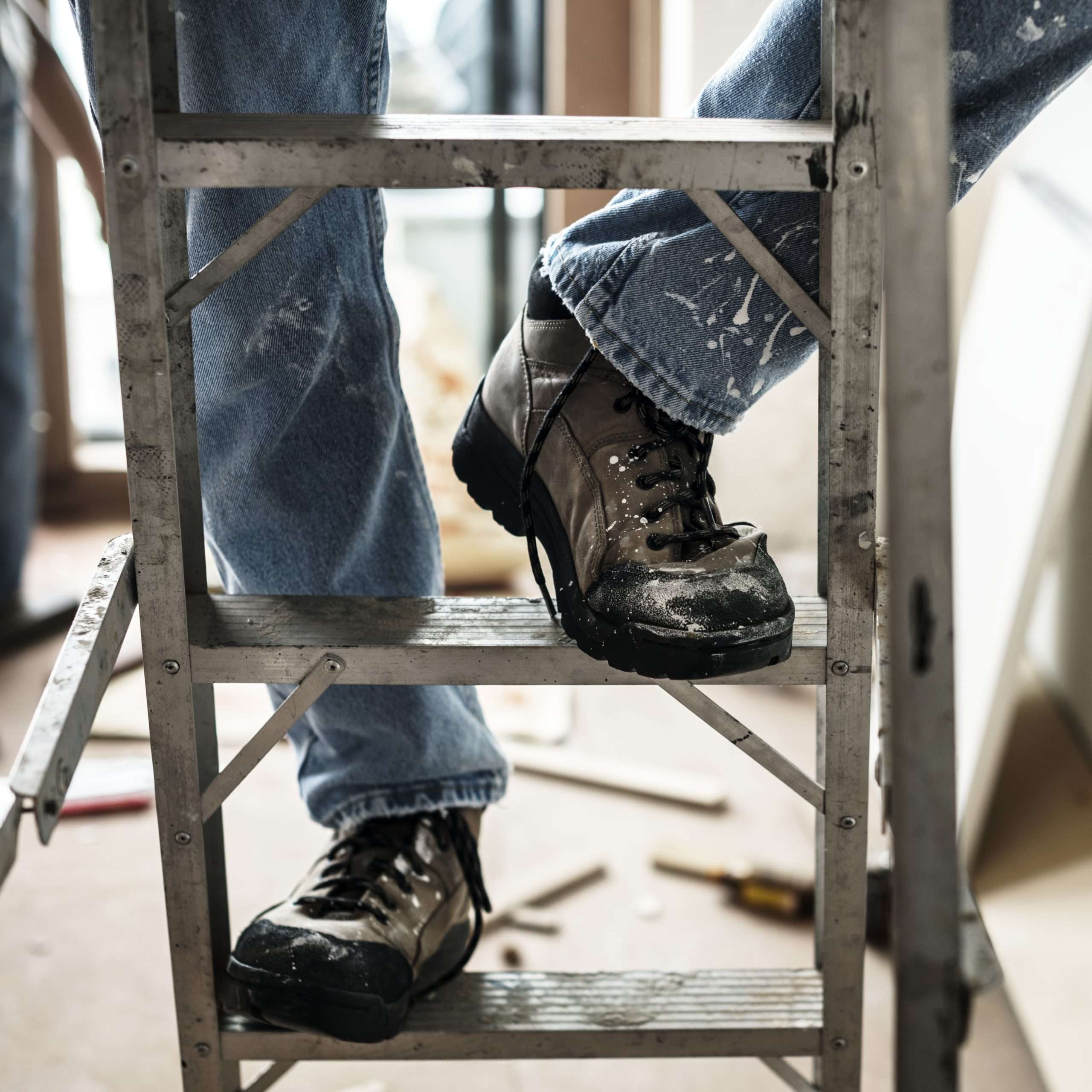
Once you’ve got a clear idea of the job, the next step is choosing the right type of ladder to suit it. For lower-level or indoor jobs, step ladder hire is often the most practical choice. Step ladders are stable, self-supporting and easy to position, which makes them ideal when you’re working in one area without needing to lean against anything. They’re great for decorating, maintenance and general access where space might be a bit tighter.
When more height is needed, extension ladders are usually the better fit. They give you the reach required for things like roof access or external work, while still being simple to handle when set up correctly. For more awkward jobs, like working on a pitched roof or over a conservatory, you’ll want to use a ladder designed for that specific purpose to make the job far more manageable. Our roof ladder hire options are built for exactly these types of situations.

Think about the working area
Where the ladder’s going is just as important as the ladder itself. Indoors, you’re usually on flat, solid flooring, so most options will work without much adjustment. The main thing to consider in this scenario is space. You always want to make sure you’ve got enough room to open or position the ladder properly without forcing it into place.
Outdoors, it can be less predictable. The ground can be uneven, soft, or sloped, which affects how stable the ladder feels once it’s in position. Before choosing what ladder to hire, it’s worth thinking about whether the area will comfortably accommodate a standard ladder setup, or if you’ll need something better suited to awkward access, especially if you’re reaching over obstacles or working on hard to reach areas.
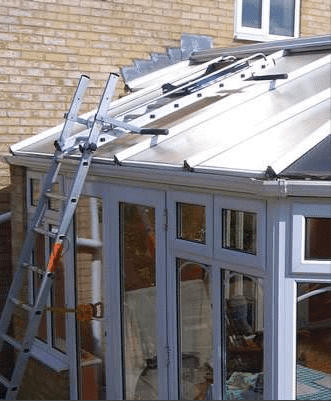
Set your ladder up properly
Even with the right ladder, how it’s set up has a big impact on how stable it feels once you’re on it. All ladders should be placed on firm, level ground and sit securely before you start climbing. If there’s any movement at the base, it’s always worth correcting that first rather than trying to work around it.
For leaning ladders, getting the angle correct and making sure it’s supported properly at both the top and bottom helps keep everything safe and in place. In these scenarios, ladder stops can help prevent the base of your ladder from slipping, while ladder stays give you some extra stability at the top, particularly when you’re working against walls or around obstacles.
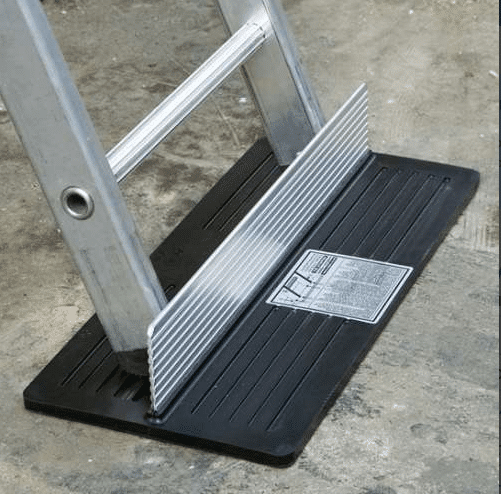
Use the ladder safely
Once you’re on the ladder, it’s all about keeping things steady and working in a way that feels controlled from start to finish. Climbing and working from a ladder should feel steady, not rushed or overextended. A good starting point is keeping three points of contact at all times, either two hands and one foot or two feet and one hand, so you stay properly balanced as you move.
Always face the ladder when climbing and take your time going up and down. It might sound obvious, but it’s easy to rush when you’re trying to get on with the job. Keeping your movements steady and controlled helps maintain stability, especially when carrying tools or working at height.
When you’re in position, avoid the temptation to overreach. If something feels just out of reach, it’s always better to come down and reposition the ladder rather than stretching across. Overreaching is one of the main reasons ladders become unstable, and it’s usually where things start to feel off balance.
It’s also worth keeping both feet on the rungs and avoiding standing at the very top unless the ladder you are using is designed for that. Staying within a comfortable working height and keeping your body centred on the ladder makes the job feel far more secure and manageable from start to finish.
At Smiths Hire, we offer a wide range of ladder hire options as part of our tool hire services, making it easy to get exactly what you need for the job in front of you. We’ve been supporting trade and DIY customers for over 50 years, supplying well-maintained equipment from our 19 tool hire depots across the North West and Yorkshire, including Manchester, Liverpool and Leeds.
If you’re not quite sure what ladder is best for your job or just want a second opinion before you hire, our team is always on hand to help. You can give us a call on 0333 323 2100, and we’ll talk you through your options and make sure you’re set up properly before you get started.